
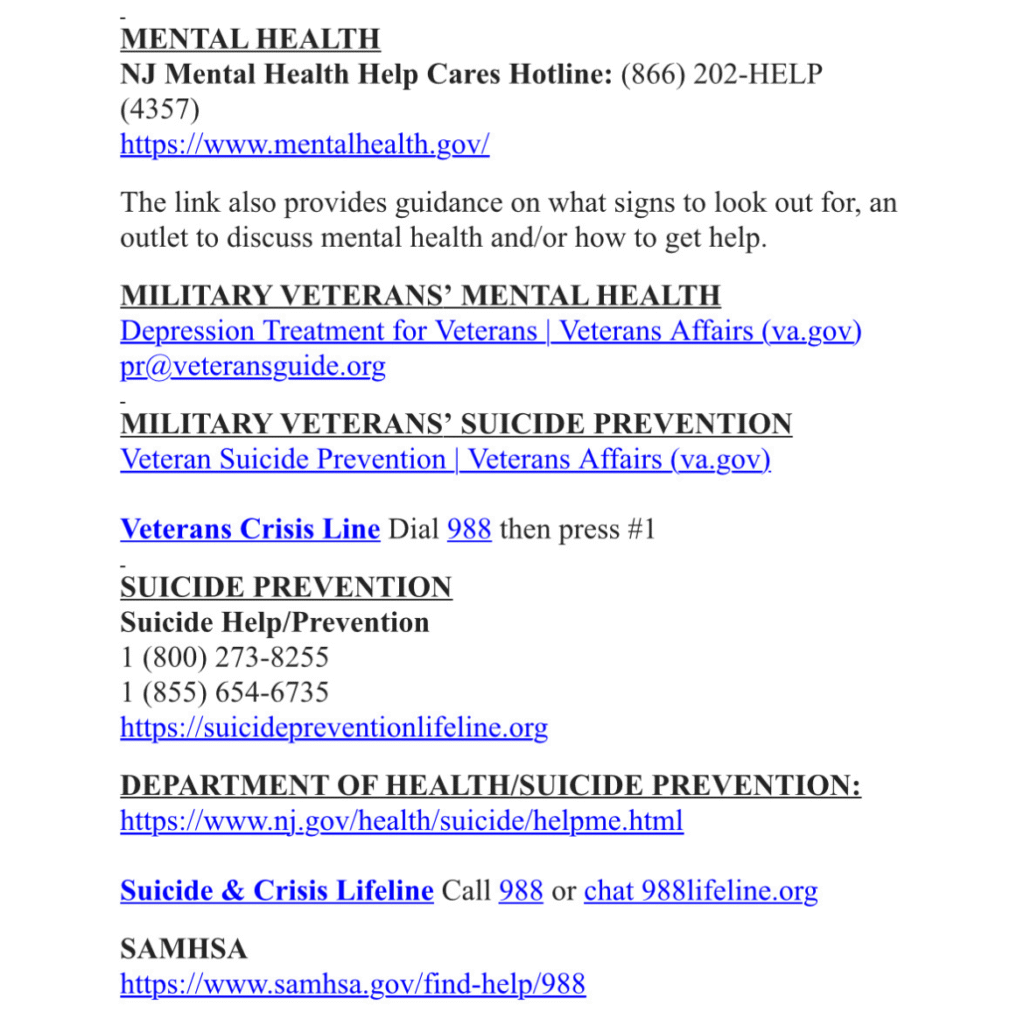
MENTAL HEALTH
NJ Mental Health Help Cares Hotline: (866) 202-HELP (4357)
https://www.mentalhealth.gov/
Guidance on signs to look out for, an outlet to discuss mental health, and how to get help.
MILITARY VETERANS’ MENTAL HEALTH
Depression Treatment for Veterans | Veterans Affairs
Email: pr@veteransguide.org
MILITARY VETERANS’ SUICIDE PREVENTION
Veteran Suicide Prevention | Veterans Affairs
Veterans Crisis Line: Dial 988 then press #1
SUICIDE PREVENTION
Suicide Help/Prevention:
1 (800) 273-8255
1 (855) 654-6735
https://suicidepreventionlifeline.org
DEPARTMENT OF HEALTH / SUICIDE PREVENTION
https://www.nj.gov/health/suicide/helpme.html
Suicide & Crisis Lifeline: Call 988 or chat online
SAMHSA
Veterans often face unique challenges when it comes to mental health, including post-traumatic stress disorder (PTSD), depression, anxiety, and the effects of reintegration into civilian life. Transitioning from military service to everyday life can be overwhelming, and many veterans may struggle to access the care and support they need. Understanding the resources available and knowing where to turn can make a significant difference in maintaining emotional well-being and overall quality of life. This guide aims to provide veterans and their families with comprehensive information on mental health support, crisis intervention, and trusted care options.
Recognizing the signs that a veteran may be struggling is crucial for early intervention. Common indicators include persistent feelings of sadness or hopelessness, irritability or anger outbursts, difficulty sleeping, withdrawal from family and friends, and increased risk-taking behaviors. In some cases, veterans may experience flashbacks or intrusive memories related to their service. Families, friends, and caregivers should remain vigilant and offer support with empathy and understanding. Creating a safe, non-judgmental space for veterans to share their experiences can encourage them to seek help and engage with professional resources.
A variety of professional support services are available specifically for veterans. The U.S. Department of Veterans Affairs (VA) offers mental health programs, counseling services, and specialized care for conditions such as PTSD and depression. In addition, the Veterans Crisis Line, which can be reached by dialing 988 and pressing 1, provides confidential, immediate support from trained counselors. Telehealth options and virtual counseling sessions have further expanded access, allowing veterans to receive care conveniently from their homes. These resources ensure that help is available at all times, providing both immediate crisis intervention and long-term mental health support.
Beyond professional services, community organizations, peer support groups, and educational resources play a vital role in supporting veterans’ mental health. Peer mentoring and veteran-specific support groups can foster a sense of belonging and understanding, helping veterans navigate challenges in a supportive environment. Family members can also benefit from educational materials that guide them in communicating effectively, recognizing warning signs, and encouraging their loved ones to seek assistance. Awareness and engagement within the community can reduce stigma surrounding mental health and encourage veterans to access the care they deserve.
Ultimately, maintaining mental health as a veteran requires awareness, proactive engagement, and connection to trusted resources. By providing timely guidance, compassionate care, and a network of support, veterans can successfully manage challenges, build resilience, and improve their overall quality of life. Whether facing immediate crisis or seeking ongoing mental health care, veterans and their families can access the help they need through a combination of VA programs, crisis hotlines, telehealth services, and community support networks. By leveraging these resources and fostering understanding, we can ensure that veterans receive the care, respect, and guidance they deserve for their mental and emotional well-being.